Amari: A Flower Shop Rooted in History, Love, and Quiet Luxury
Founded by a second-generation florist, Amari brings decades of experience from the heart of Europe to Marbella. What began as a small family flower shop grew into a respected floral studio in Prague, creating arrangements for some of the city’s most iconic luxury hotels, including Andaz, Augustine Luxury Collection, and Four Seasons.
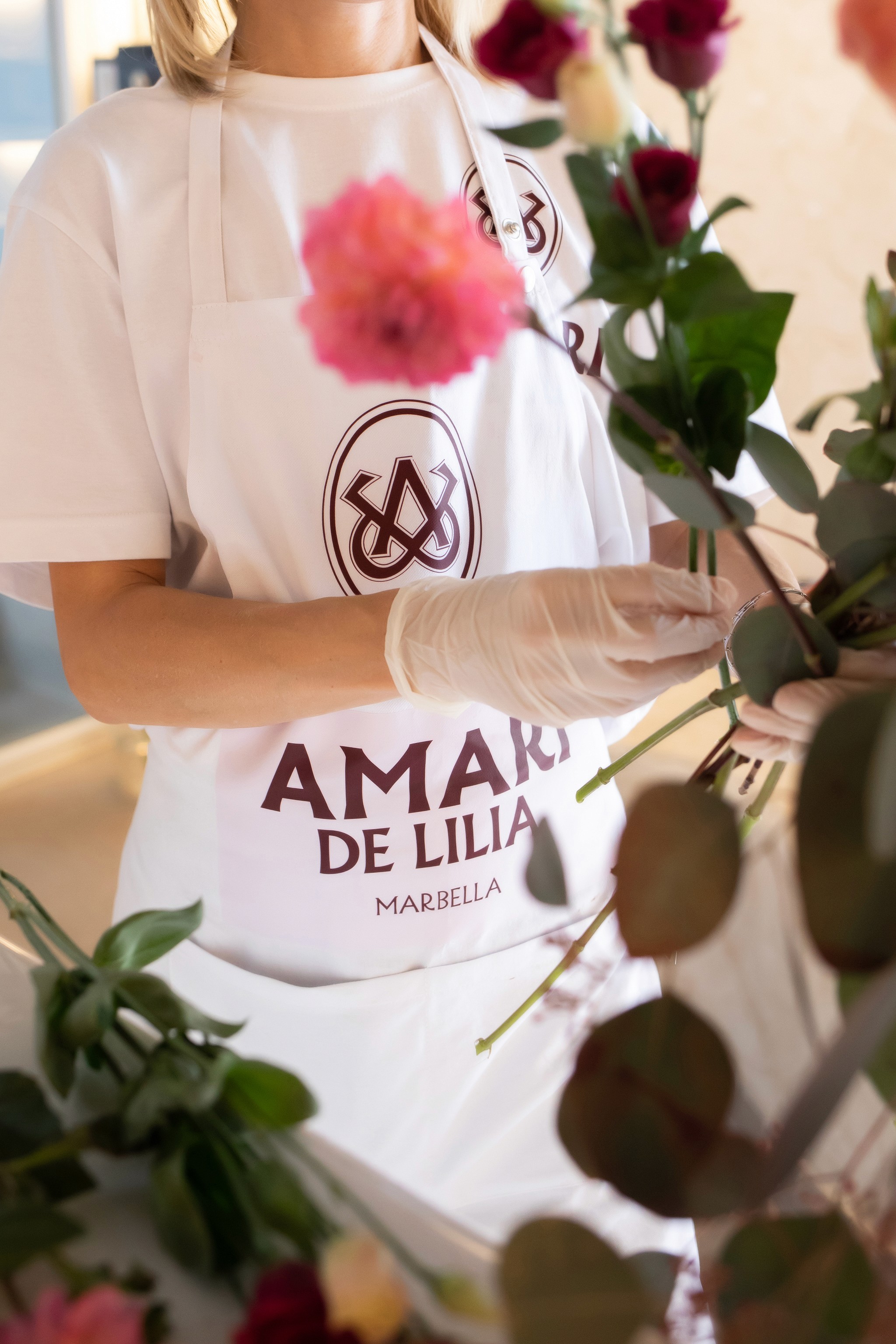
Amari: Where 25 Years of European Elegance Meets Spanish Sun
Walk into Amari and you'll notice something immediately: this isn't a flower shop trying to find its footing. There's a quiet confidence here, a sense of place that usually takes years to cultivate. And in a way, it has.
"We're not new," the founder says with a knowing smile. "We're just expanding into a new space."
The Prague Chapter
Before Amari took root in Spanish soil, there was Twinics, a celebrated floral studio in the heart of Prague. That's where the real story begins, though the founder is careful to distinguish between past and present.
"Twinics was in Broadcastle, and that history stays there," she explains. "This is a fresh start. But I want people to know this isn't someone who just decided to open a flower shop on a whim."
In Marbella, she's watched newcomers arrive constantly, many displaced, starting over, learning as they go. She understands that journey. But her path looks different, shaped by decades in one of Europe's most beautiful cities.
Prague. The center of Europe, she calls it. And she's not wrong to feel proud, her team there decorated the city's most prestigious addresses: the Andaz, Augustine Luxury Collection, Four Seasons. The kind of places where flowers aren't just pretty; they're part of the architecture of luxury itself.
"All of that experience," she says with a laugh, "came here in my van. People just need time to discover it."
A Mother's Legacy
But even Prague wasn't the beginning. The real origin story goes back 25 years, to a tiny flower shop on a forgotten street where her mother sold blooms simply because she loved them.
No Instagram. No marketing strategy. Just flowers and passion.
When her daughter joined the business, everything shifted. Two shops opened in central Prague. Today, one remains, right on the main street of Old Town, a testament to years of careful work and earned trust.
"My mother always told me: if you have good taste, you know languages, you understand flowers... why not do what you're good at?"
For fifteen years, flowers have been more than work. They've been woven into the fabric of her life, even during periods when she pursued other paths.
"I just love them," she says simply. And you believe her.
What's in a Name?
Amari isn't a word you'll find in a dictionary, at least not in just one language. It's deliberately hybrid, intentionally layered.
In Spanish, amar means to love. In Armenian, Amara means summer. And then there's Ari, the nickname for her daughter, Ariana.
Love. Summer. Family.
"It sounds a bit Eastern, maybe Arabic," she adds. "Some people even think of Omar, which means prince. Everyone hears something different."
That ambiguity is the point. Amari is designed to feel familiar yet mysterious, warm yet elegant—much like the shop itself.
More Than Business
Ask her what flowers mean, and you won't get a business pitch.
"I don't really see flowers as a business," she admits. "You can't overprice them. They have their value, and that's it."
What she talks about instead is transformation. How a fresh delivery makes her wonder why anyone could walk past without stopping. How the smallest apartment changes completely with a single stem. How you can't help but smile every time you glance at them.
"They make every birthday, every wedding, every ordinary day better."
This philosophy extends beyond the shop's walls. On Sundays, leftover flowers are bundled with ribbons and placed outside for anyone to take. One of her weekend assistants, a student, often insists on working for free.
"She tells me the happiness people feel when they receive a flower is worth more than money."
It's a radical idea in retail: that generosity might matter more than margin.
Redefining Luxury
Coming from Denmark and Central Europe, she noticed something missing in Spain: flower culture.
"In Denmark, you could buy flowers everywhere," she says. "Here, many shops feel chaotic. You enter and don't know what to choose."
Amari takes a different approach. The space is calm, intentional, clean. Stems are processed outdoors in the sunshine, then brought inside fresh. There's no clutter, no overwhelming choices, no pressure.
"Luxury doesn't mean expensive," she insists. "Luxury is how you feel when you're here."
There's even a hidden space in back, quiet, intimate, where brides can sit and plan weddings without noise or rush. It's the kind of detail that reveals the founder's background: creating experiences, not just transactions.
An Open Door
Still, she's aware of the unintended barrier her own taste might create.
"Some people are afraid to come in. They think it's only for people who know."
Nothing could be further from the truth.
"You can come in and buy one rose," she says firmly. "That's enough."
Fresh flowers arrive every other day. The shop breathes and changes like something alive. And that's exactly the point, this isn't about selling products. It's about sharing what flowers do: transform moments, elevate moods, remind us to notice beauty even when life feels ordinary.
"This place," she says in closing, "isn't about selling flowers. It's about how flowers make people feel."
And in Amari's sunlit space, lined with stems from across Europe, that feeling is precisely what you'll find.
